










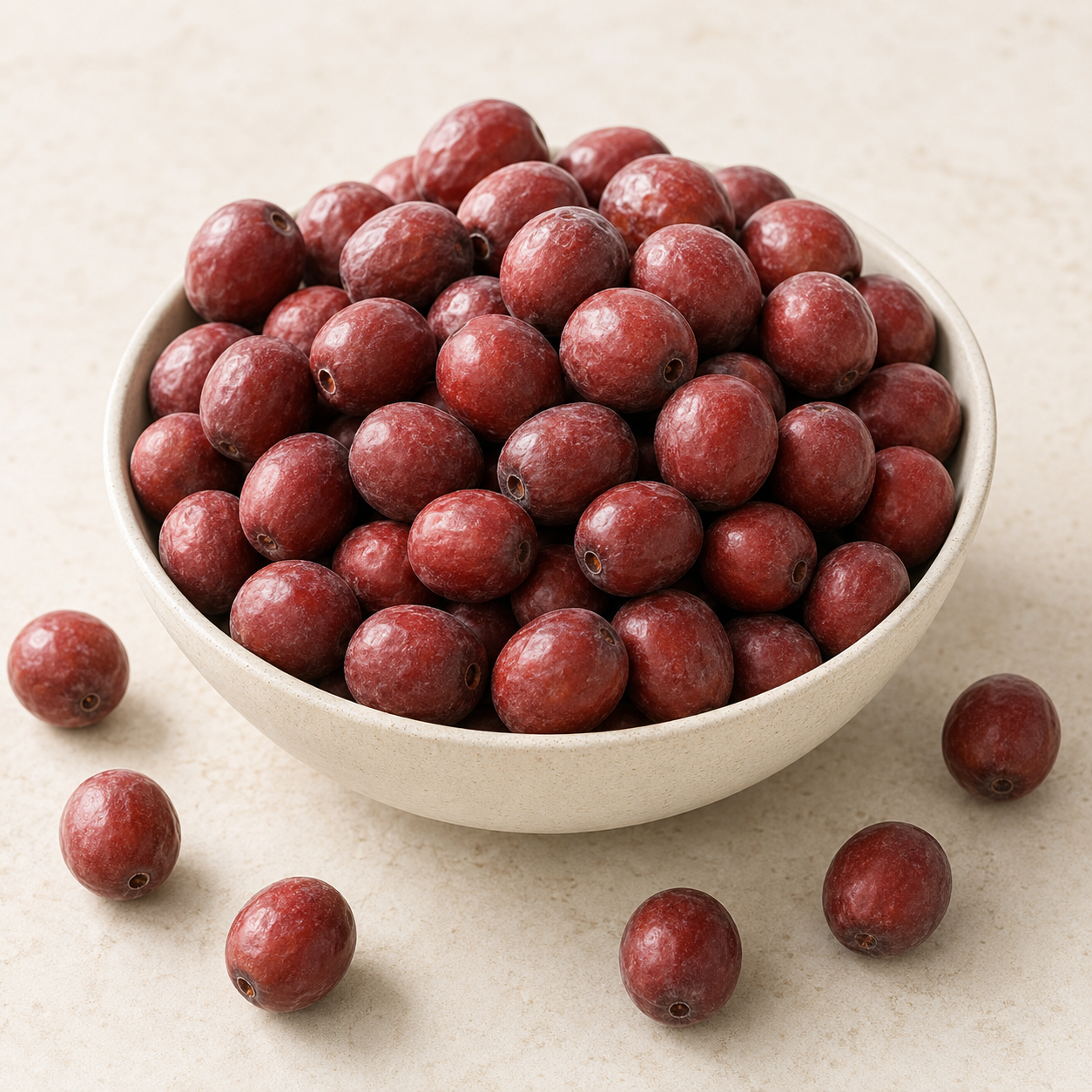



With its vivid red color, bright tartness and small size, Iranian barberry works as a culinary accent and as an ingredient for drinks, confectionery and dried-fruit blends. Harvest, drying, cleaning and storage all influence quality.
Barberry: a delicate commercial fruit
A large share of Iran’s seedless barberry is produced in South Khorasan. After harvest, berries follow different drying routes, affecting color, texture, release time and commercial positioning.
What do Puffaki and Daneh Anari mean?
These terms are closely associated with drying method and conditions. Puffaki is commonly dried with airflow and shade while still on branches; Daneh Anari is separated earlier and generally reaches the market sooner.
- Puffaki: airier appearance and bright color for premium presentation
- Daneh Anari: denser texture and practical value for many applications
- Cleaned barberry: more ready for packing lines and kitchens
- Processing grade: agreed specifications for extracts, beverages or manufacture
Evaluating a sound lot
Attractive color should come with a natural aroma, controlled moisture and good cleanliness. Excessively soft, clumped berries or off-odors may indicate unsuitable handling or storage.
- Compare color and size across representative samples
- Define limits for stems, leaves, stones and other foreign matter
- Match moisture and water activity to the intended pack
- Check for pests, mold, fermentation and warehouse odors
Beyond a rice garnish
- Rice, salads and savory meat dishes
- Sweet-sour sauces, chutneys and seasoning blends
- Infusions, syrups and fruit beverages
- Chocolate, granola, bakery and dried-fruit mixes
Selecting by application
| Application | Preferred feature | Format | Priority |
|---|---|---|---|
| Premium retail | Bright, airy berry | Cleaned | Uniform appearance |
| Foodservice | Stable tart flavor and texture | Whole berry | Cleanliness and value |
| Processing | Repeatable lot specification | Agreed grade | Moisture and yield |
Protecting color and preventing clumps
Light, heat and moisture can alter barberry color and texture. Sealed packs, cool dry storage and protection from excessive stacking pressure help preserve presentation.
- Allow product temperature to stabilize before final sealing
- Use an inner liner that limits moisture and contamination
- Avoid crushing cartons or blocking appropriate airflow
Useful order specifications
- Define drying style and visual grade
- Set limits for foreign matter, damaged berries and moisture
- Describe cleaning and additional sorting requirements
- Finalize pack weight, liner, date and lot identification
«Appearance matters in barberry, but cleanliness, stability and natural flavor are what encourage repeat purchase.»


