







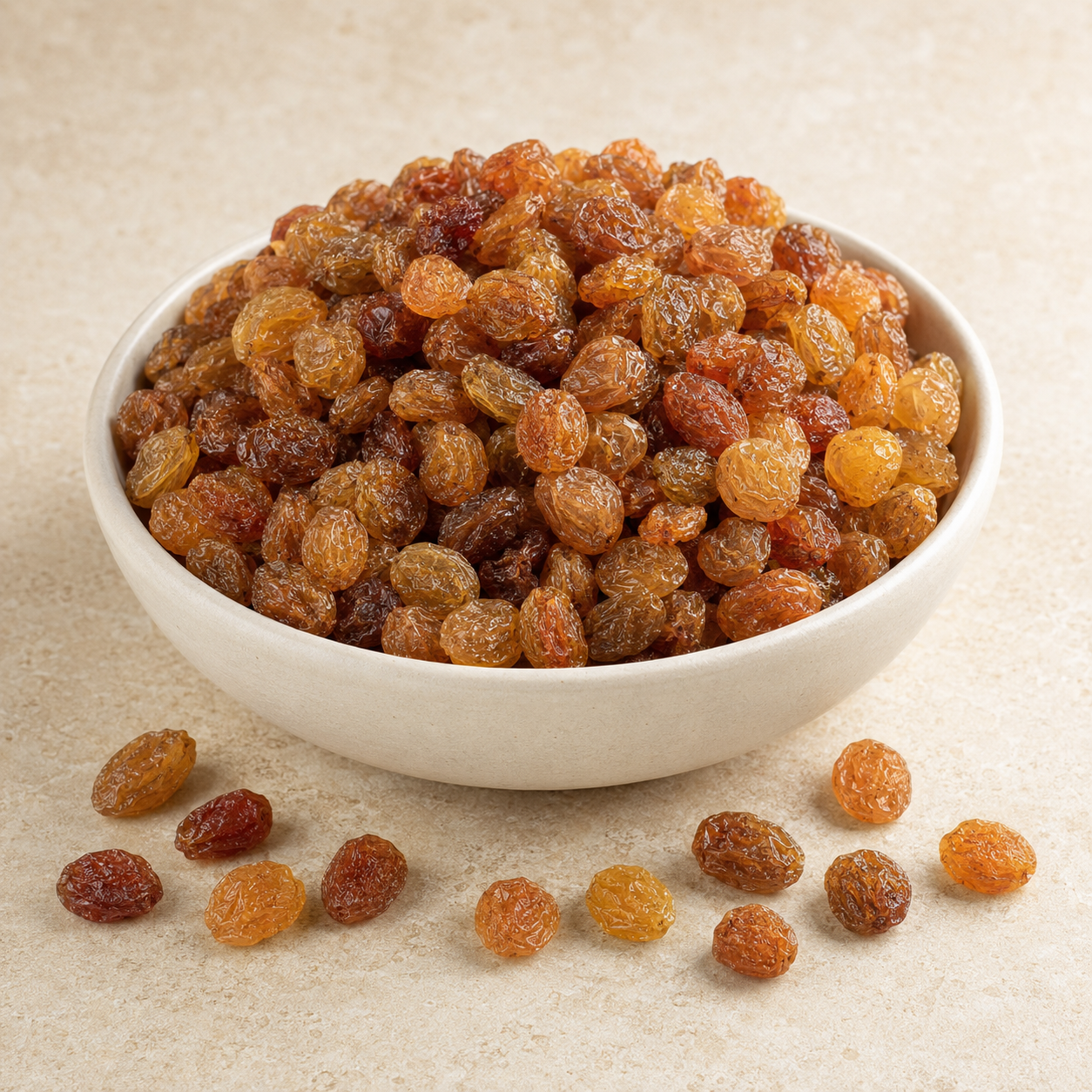


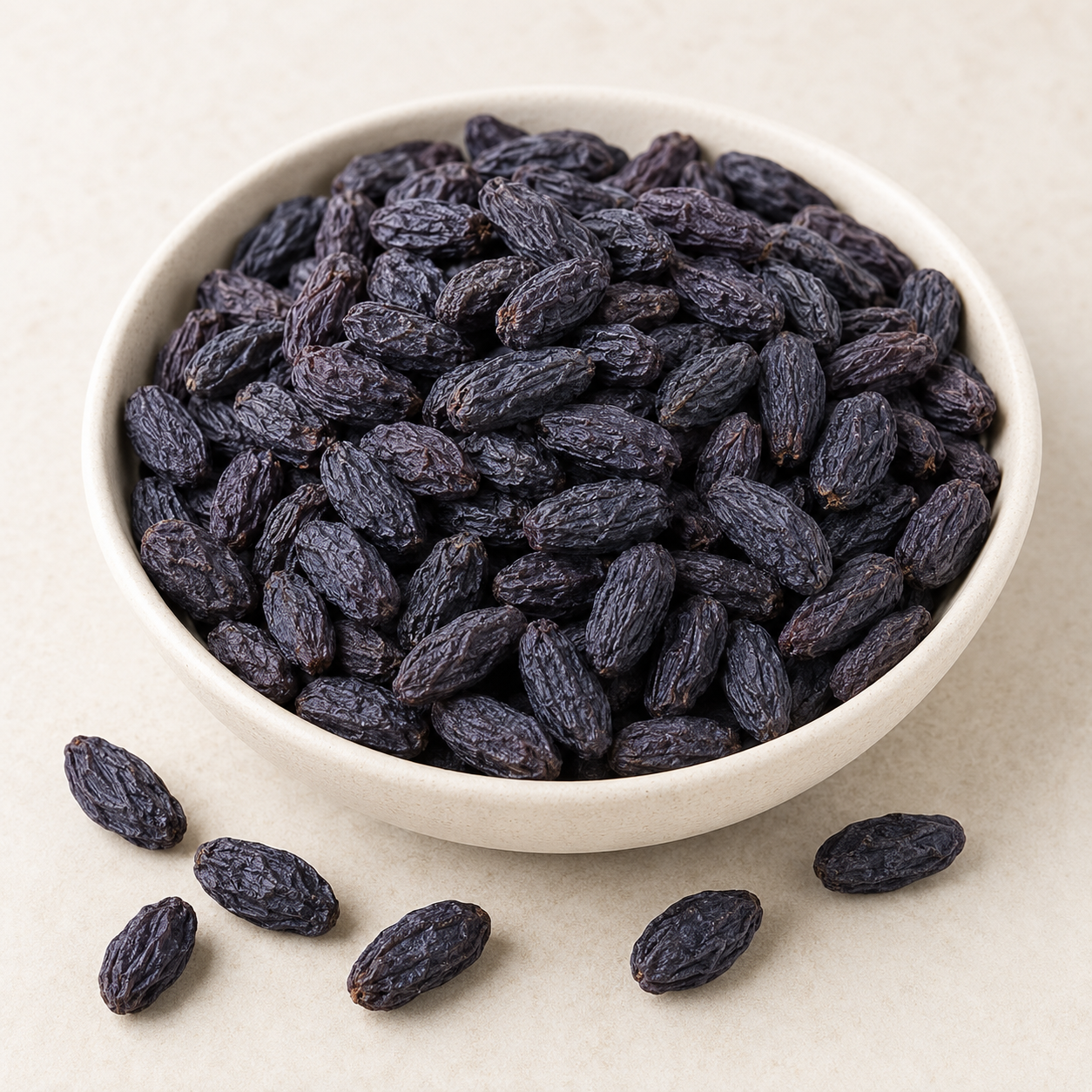
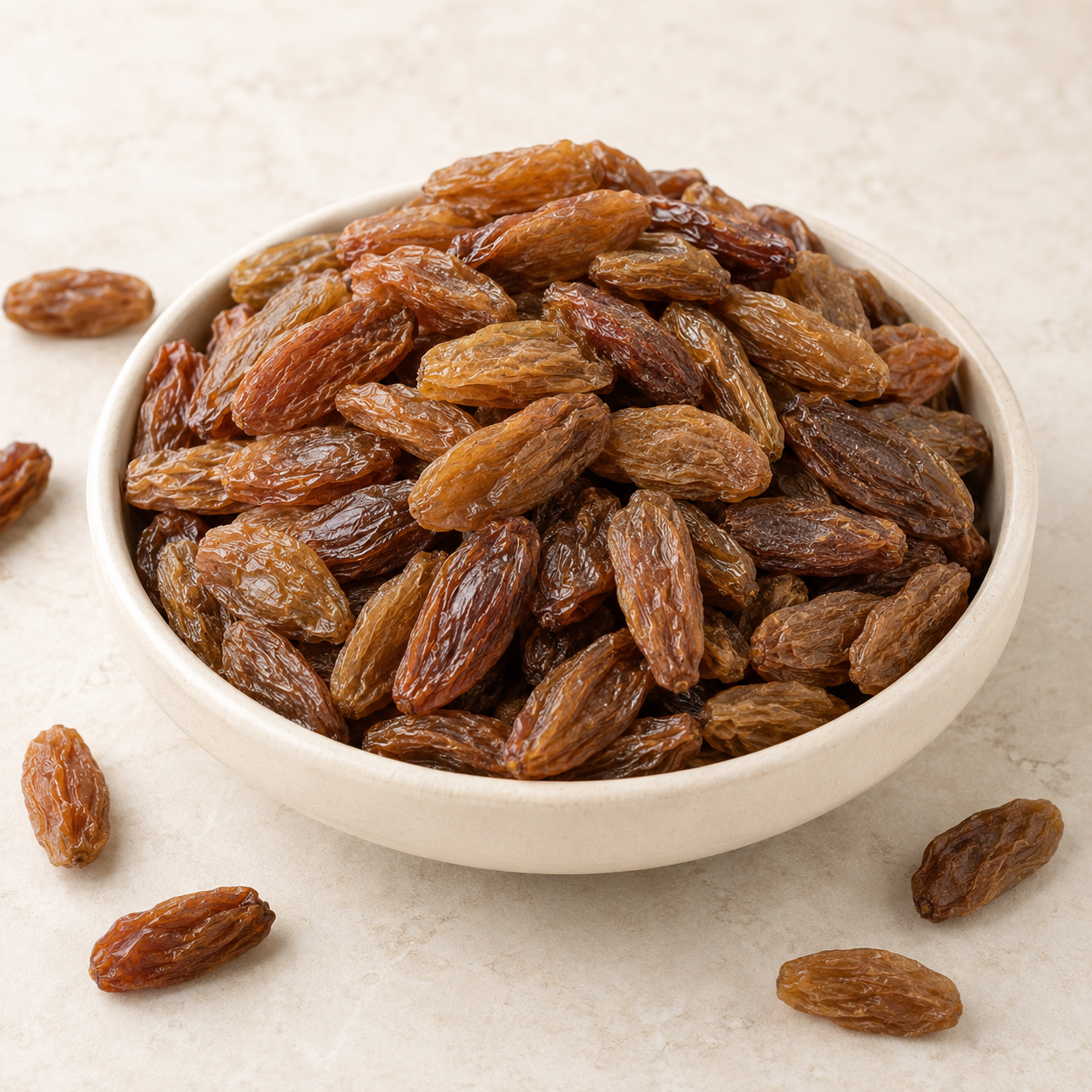
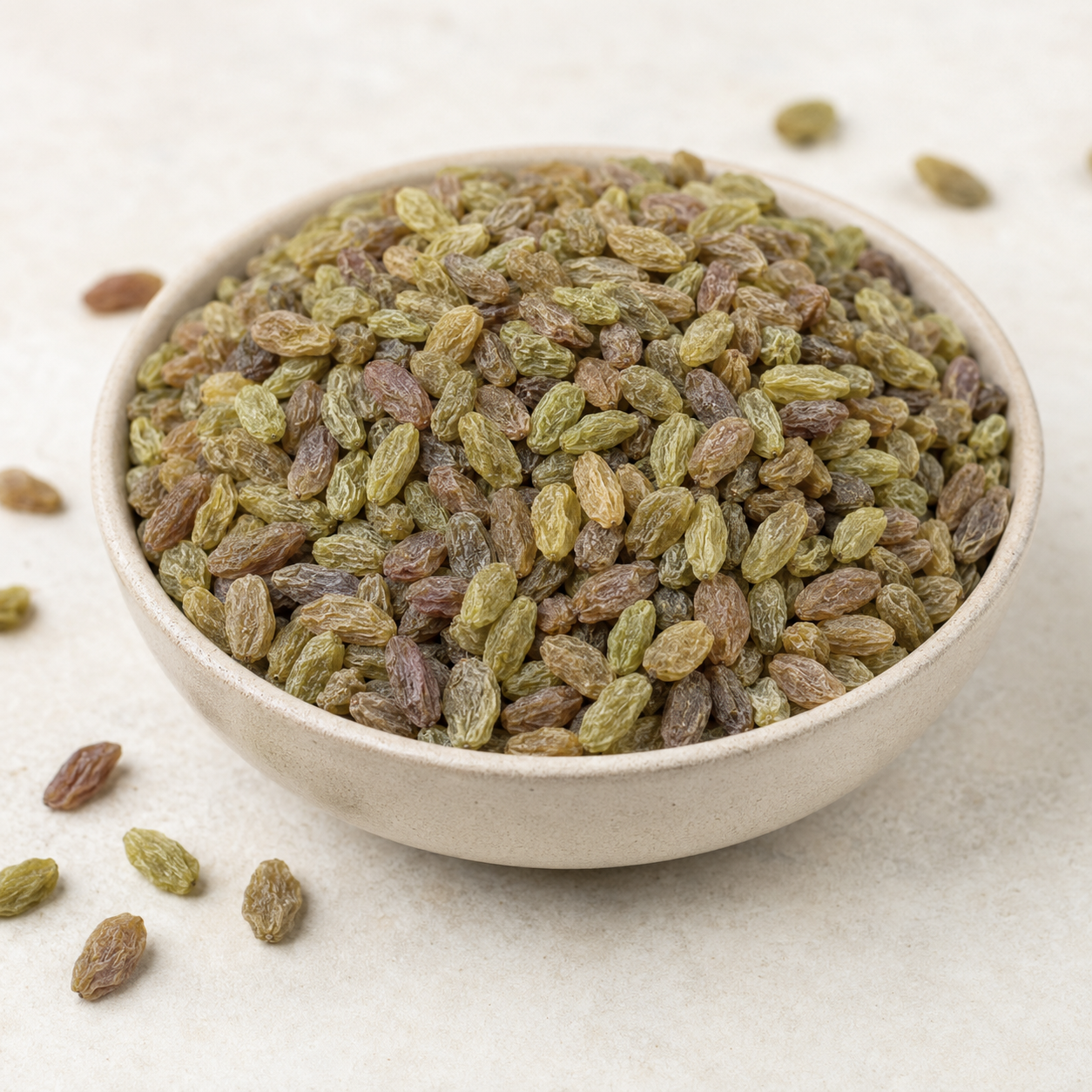

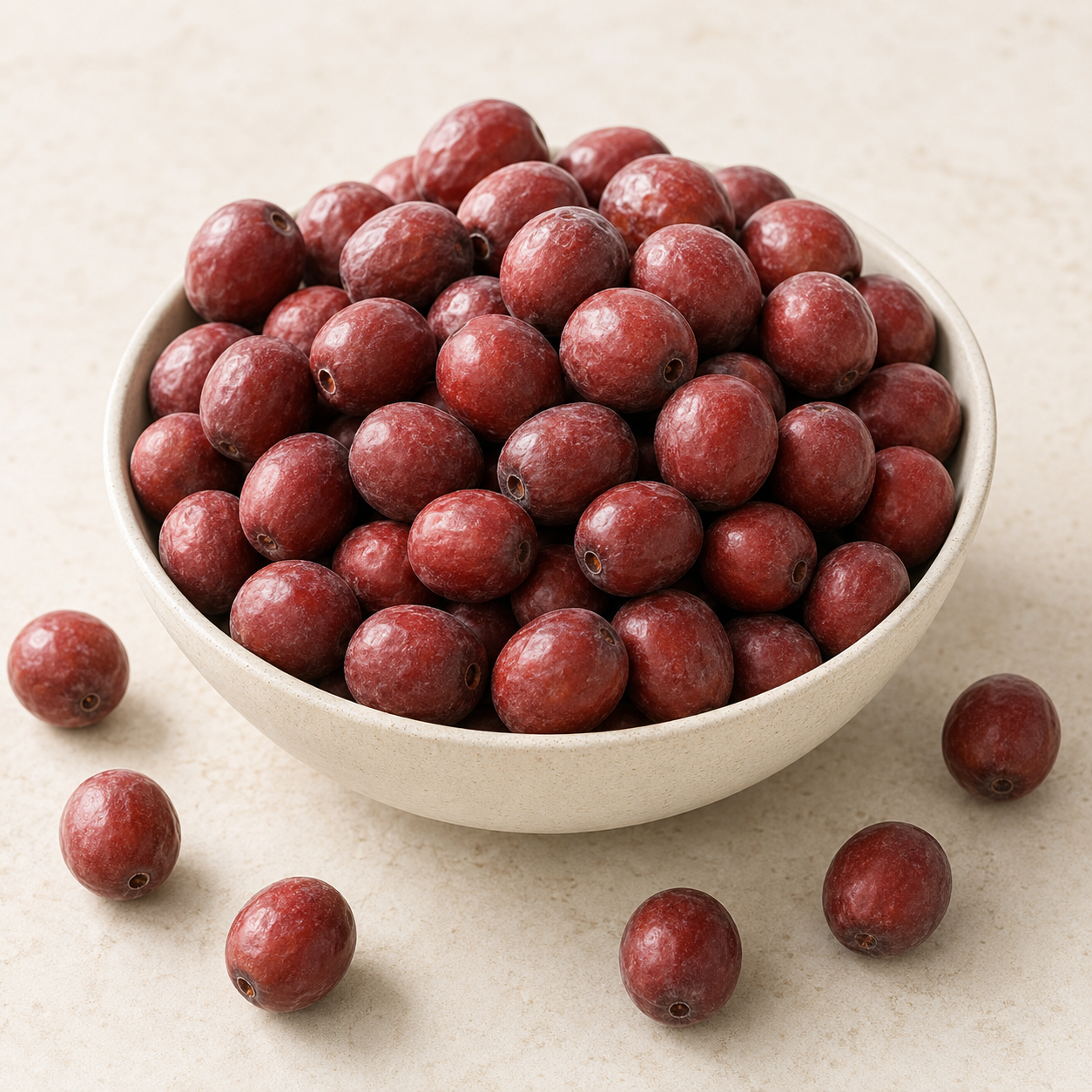

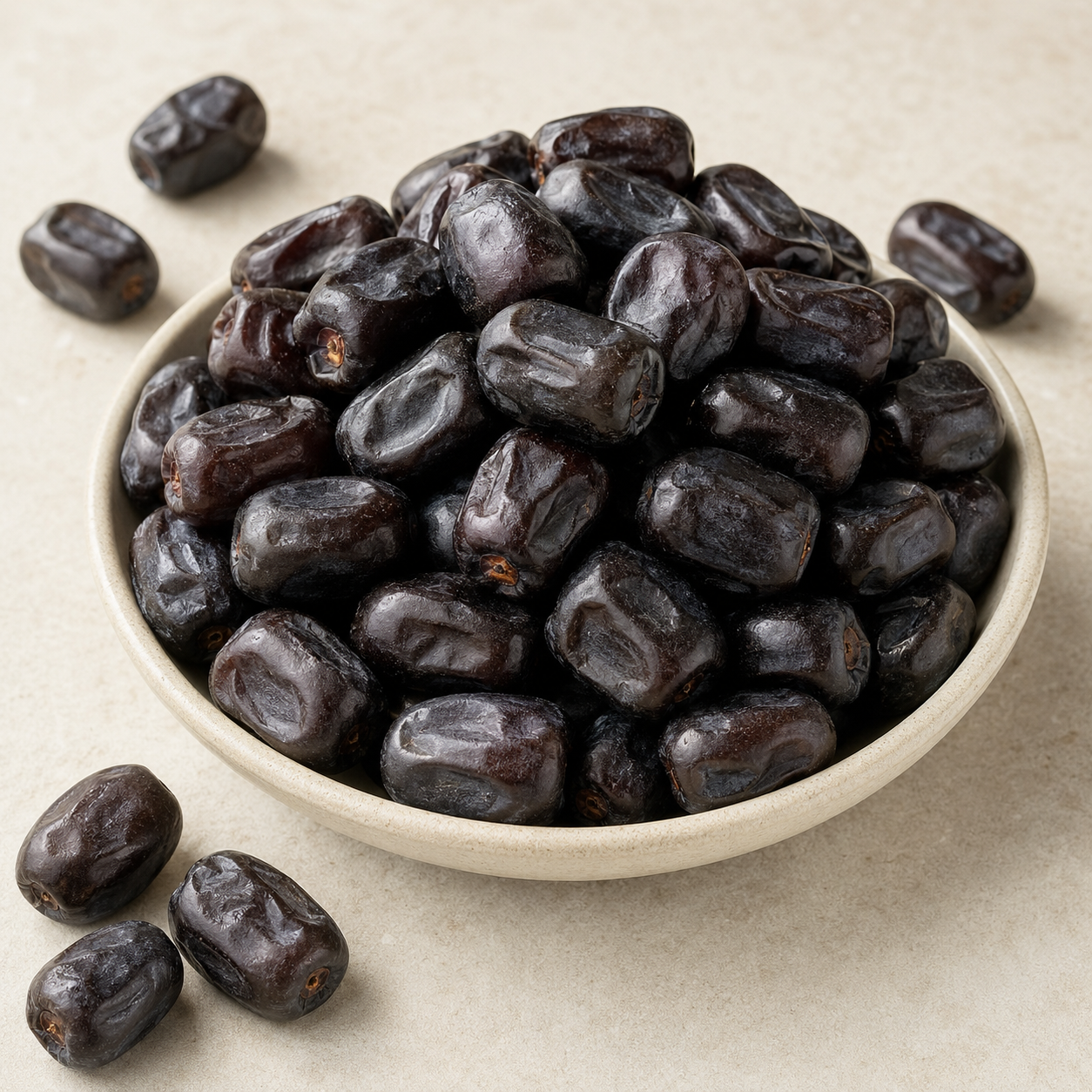
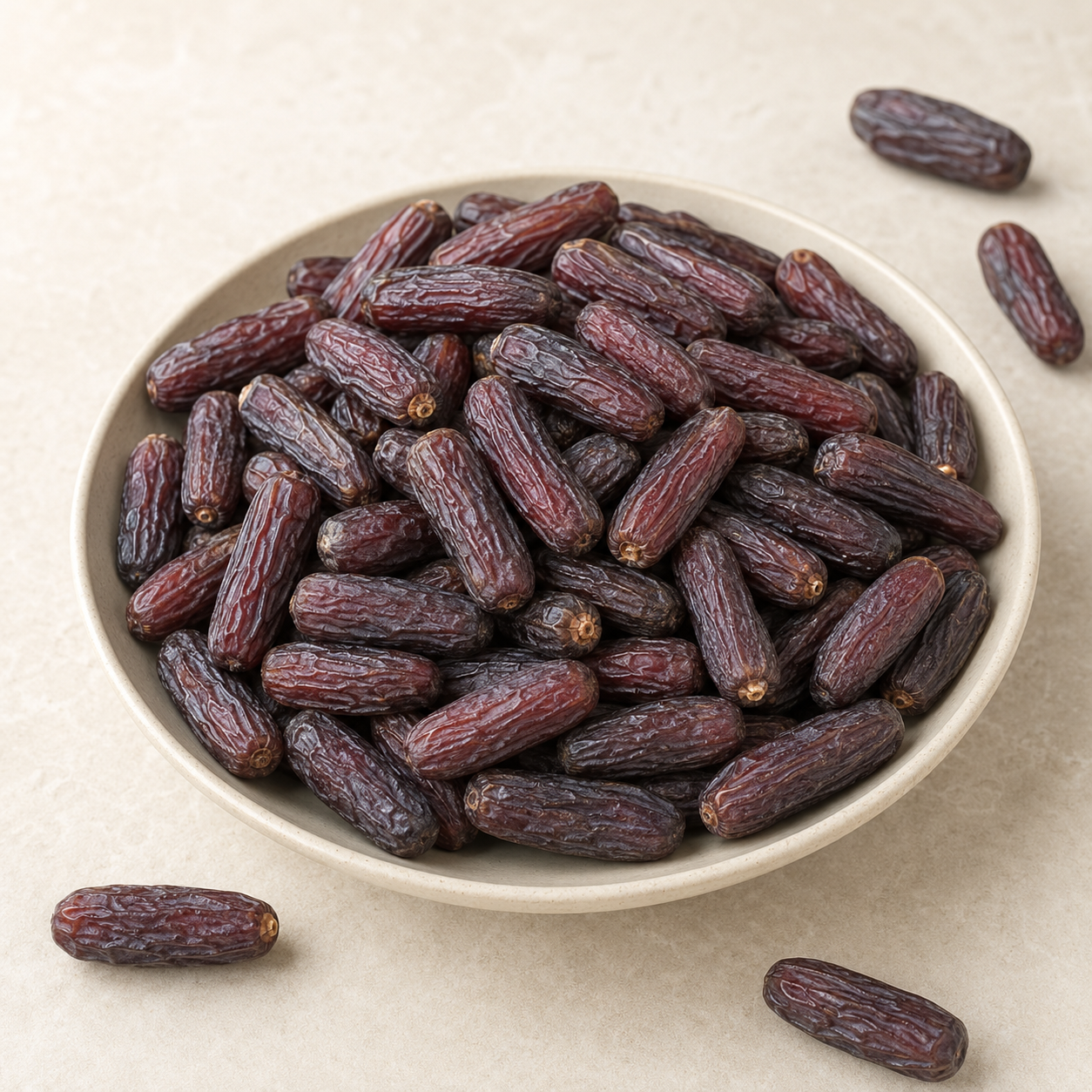
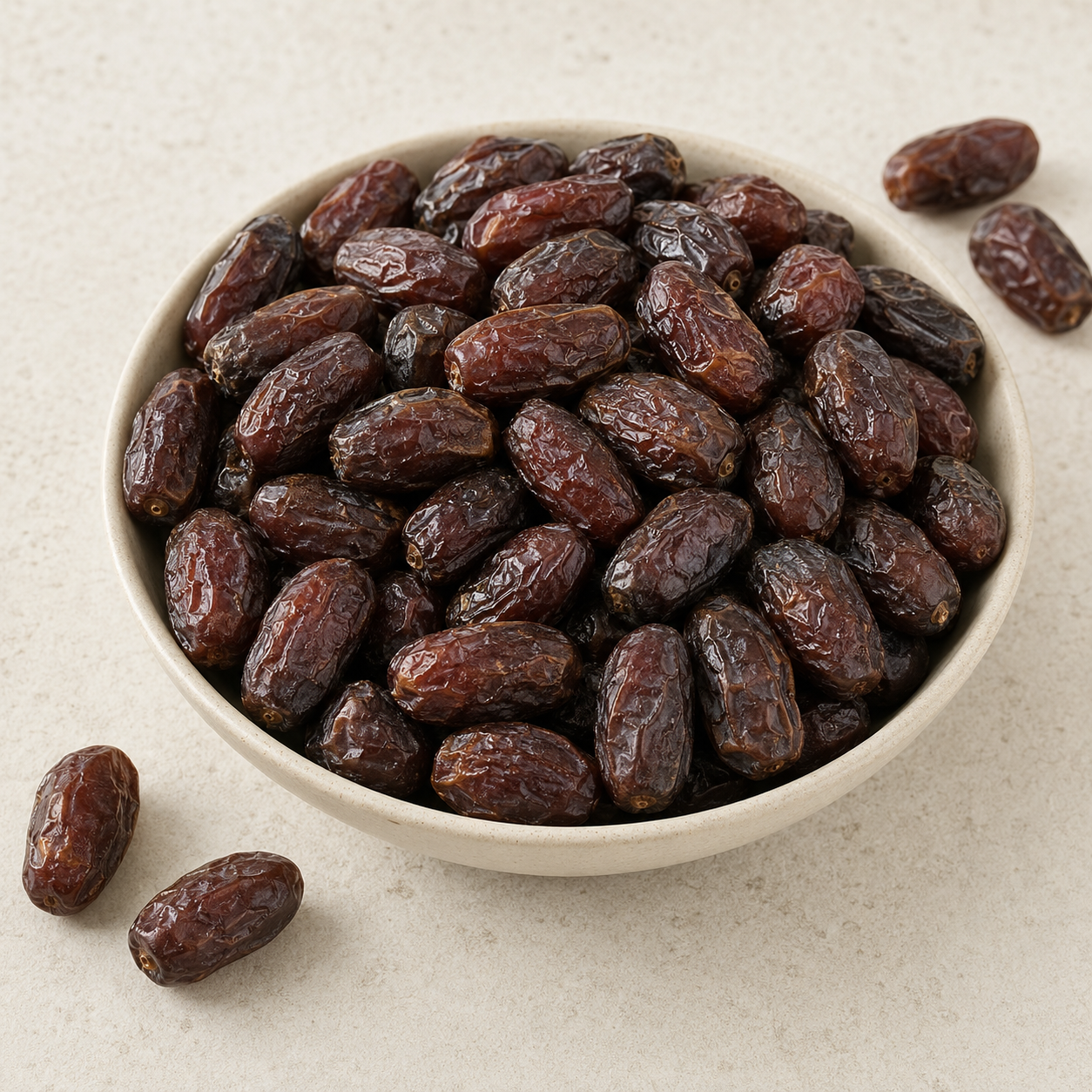
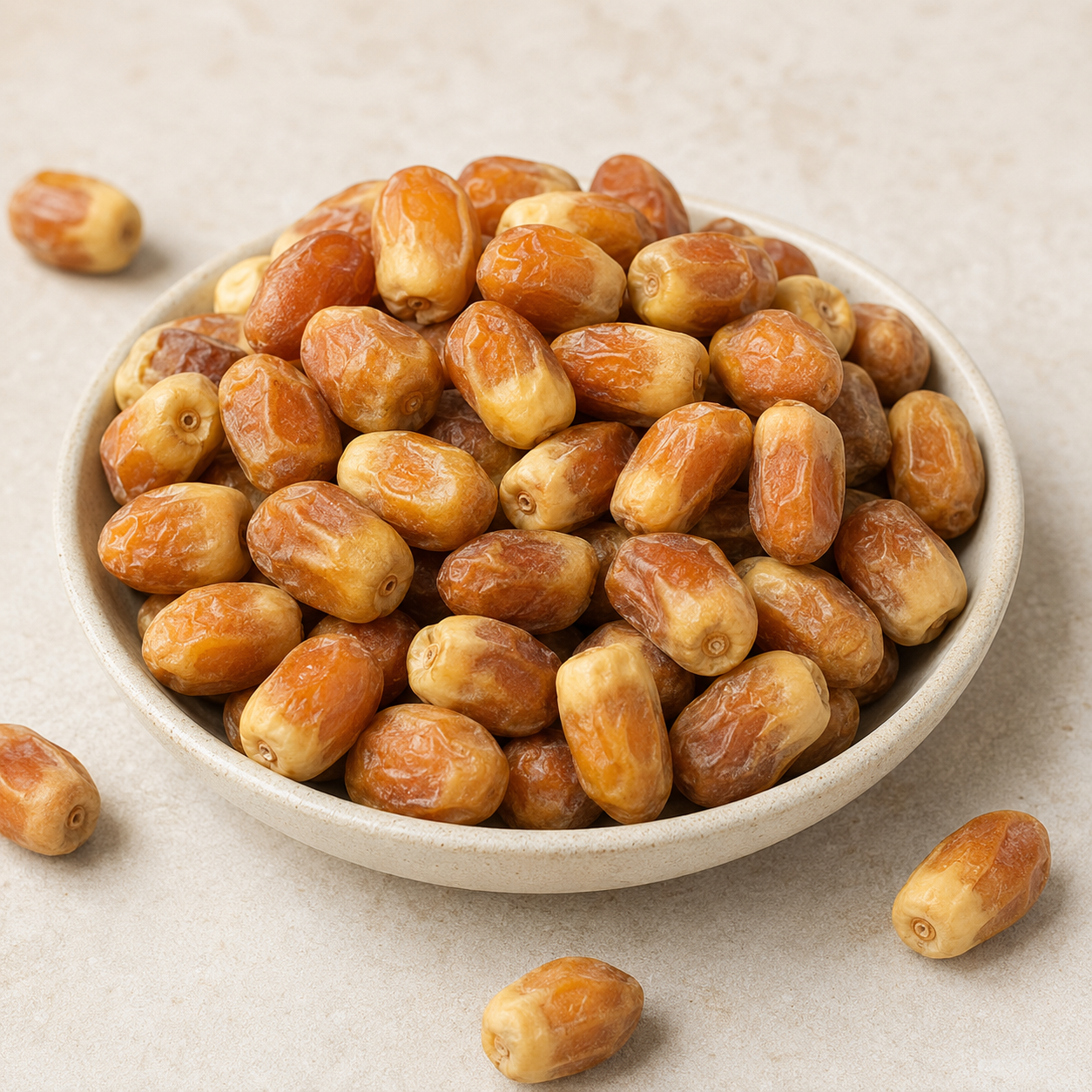
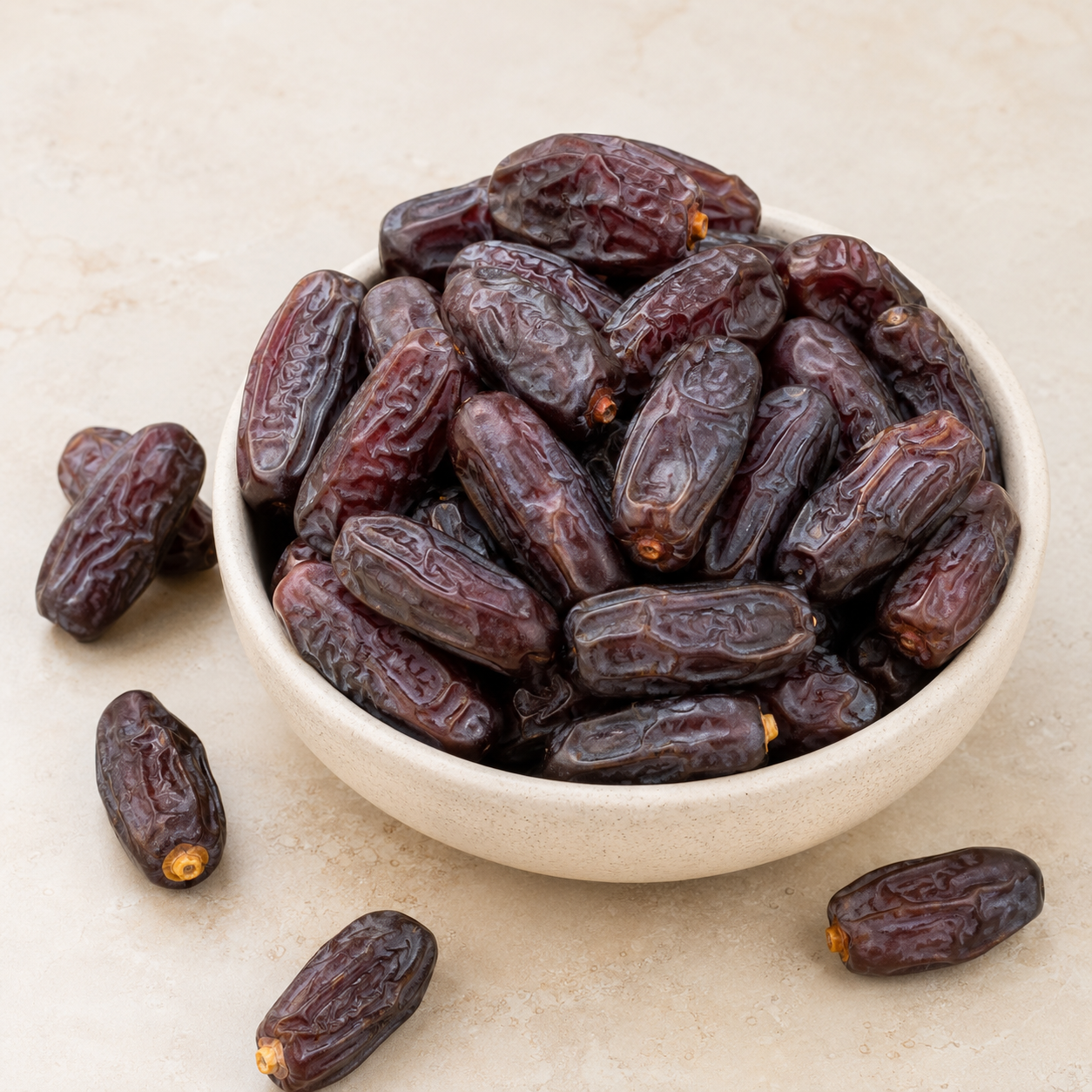


Raisin is one name for several distinct experiences, from green pencil and bright golden to black, Tifi and shade-dried fruit. Grape variety, drying and processing shape the color, texture, sweetness and best use of each type.
Why raisin varieties differ
As grapes dry, water decreases while sugars and flavor compounds become concentrated. Drying speed, light, temperature and pretreatment can create a bright soft product or a darker fruit with deeper flavor.
Six expressions of Iranian raisins
Selection should begin with the application. A raisin designed for a premium nut mix is not automatically the best choice for industrial baking; size, stickiness, color and process tolerance need to fit the end use.
- Green pencil: elongated, green and popular for snacking
- Golden: bright amber appearance for retail and confectionery
- Black: deep color and fuller flavor for direct use or blends
- Tifi: a traditional option balancing sweetness and texture
- Shade-dried: emphasizes a naturally dried character
- Sultana raisin: a versatile option for cooking and processing
Reading the quality of a lot
A sound lot shows reasonably uniform size and color, a natural aroma, controlled moisture and low contamination. Excessive stickiness, unusual sugaring or very dry berries should be assessed in the context of the specified type.
- Set limits for stems, grit, immature and damaged fruit
- Match moisture to application and expected storage period
- If surface oil is used, define its type and amount
- Review microbiological and residue results for the destination
From snack pack to production line
- Nut mixes, portion packs and dried-fruit blends
- Cakes, breads, cookies and breakfast cereals
- Chocolate, desserts and dairy products
- Sauces, chutneys and sweet-savory dishes
Comparing popular types
| Type | Appearance | Texture/flavor | Typical use |
|---|---|---|---|
| Green pencil | Long and green | Chewy and sweet | Snacking and nut mixes |
| Golden | Bright amber | Soft and balanced | Bakery and retail |
| Black | Dark | Deeper flavor | Direct eating and blends |
| Shade-dried | Natural variation | Traditional profile | Natural product ranges |
Managing moisture and stickiness
Raisins gain or lose moisture from their surroundings. Unsuitable packs may make them sticky, clumped or excessively dry. Stable temperature, dry storage and a barrier matched to the distribution period are important.
- Inspect the inner liner and package seals
- Keep cartons away from heat and moisture sources
- For industrial bakery use, test behavior during mixing and baking
A practical selection path
- Define the end use and expected color
- Set size, moisture, stem and defect tolerances
- Clarify washing, oiling and additional sorting needs
- Test the sample both directly and in the final process
«Raisin diversity is not extra complexity; it is an opportunity to manage flavor, appearance and final-product cost with greater precision.»


