





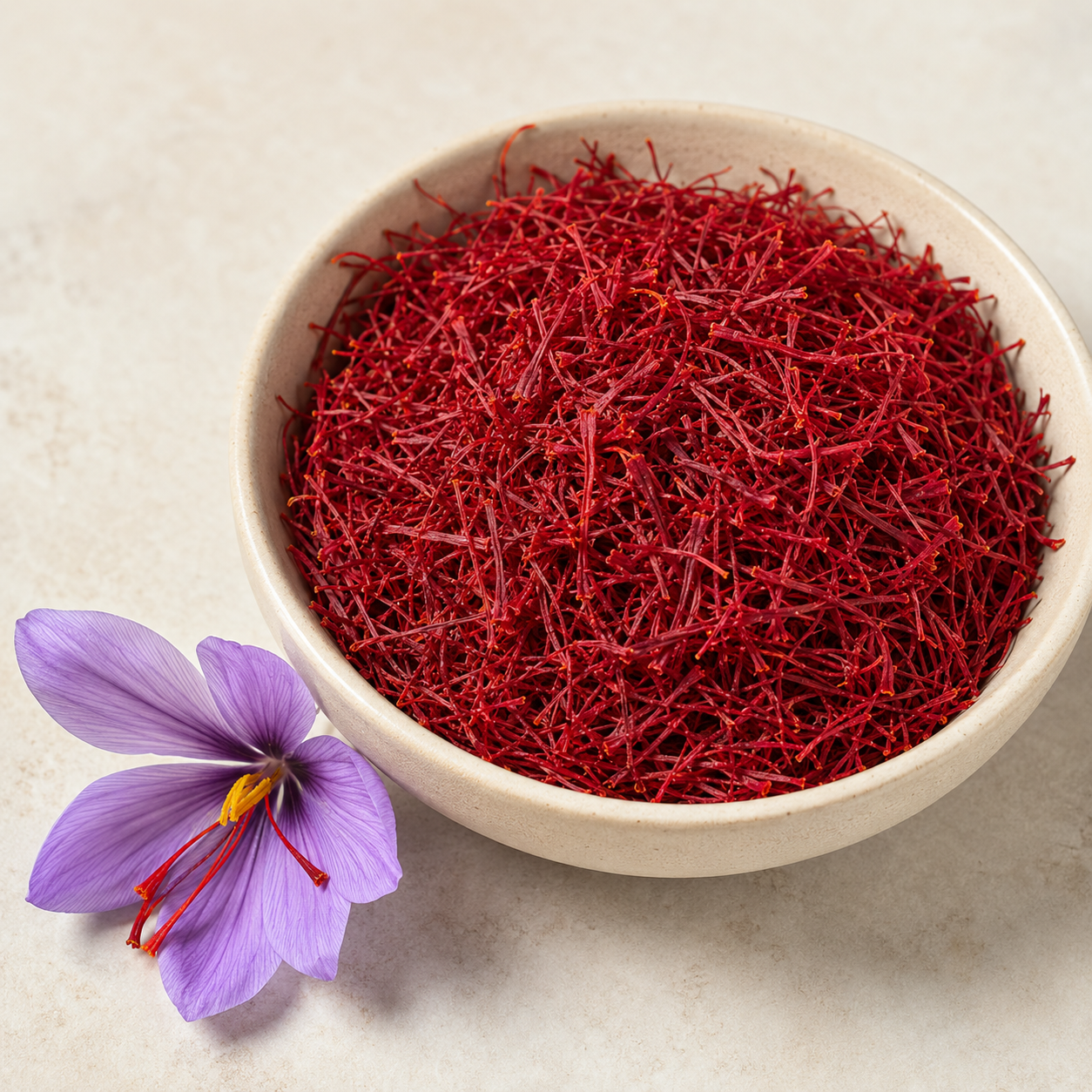








Saffron is light in weight but rich in detail. Thread form, aroma, coloring performance, freshness and packaging all shape its culinary experience and commercial value.
From flower to saffron thread
Saffron stigmas are harvested during a short season, separated and carefully dried. Precision in these early stages helps preserve aroma, color and appearance, making origin, processing time and storage conditions relevant to every lot.
Understanding common market forms
Commercial saffron names usually refer to how the red and yellow parts are separated and how uniform the threads appear. A sound purchase compares that visual definition with a real sample and appropriate test results.
- Negin and Super Negin: separated red threads, often larger and highly presentable
- Sargol: separated red portion with shorter threads
- Pushal: red threads with some yellow style, showing more of the natural structure
- Dasteh: a more complete stigma arranged in a traditional bundle
Signals for a professional evaluation
Water turning intensely colored within seconds is not, by itself, proof of authenticity. A proper evaluation combines thread inspection, aroma, moisture, foreign matter and laboratory measures related to color, aroma and flavor.
- Inspect thread form, hue and breakage
- Look for a clean characteristic aroma without damp or stale notes
- Match the certificate, lot number and test date
- Use packaging that limits light, moisture and odor transfer
Food and product applications
- Infusions for rice, savory dishes and drinks
- Confectionery, ice cream and dairy desserts
- Tea and herbal infusion blends
- Premium retail and gift packs
Matching form to need
| Need | Common form | Advantage | Check |
|---|---|---|---|
| Premium display | Negin | Visible, uniform threads | Control breakage |
| Culinary use | Sargol | Convenient use | Measure coloring performance |
| Natural structure | Pushal or Dasteh | More complete stigma appearance | Define yellow-part proportion |
Preserving aroma and color
Keep saffron in an inert, tight container away from direct light, moisture, heat and strong odors. Repeatedly opening a large pack may expose the remaining product, so pack size should reflect the rate of use.
- Use a food-contact-safe, neutral inner container
- Separate lots and maintain traceability codes
- Control headspace and thread movement in presentation packs
Questions for a supplier
- What is the exact commercial form and visual specification?
- Which lot and date do the test results cover?
- How are breakage, moisture and foreign matter limited?
- Is the pack designed for retail presentation or bulk transit?
«Saffron value is built on a balance of authenticity, sensory performance, measurable results and correct care.»


